As you research bonsai, you’ll probably read, watch, and hear how important using “bonsai soil” is. This page will describe what this term means, why it’s important, and how necessary it may or may not be. After all, some of my favorite naturally occurring miniaturized trees grow out of rock cracks alongside the highway. Given that, how important can soil really be?
What does a tree’s root system need?
Soil really impacts the root system, so we’ll focus on its needs here:
- Water – Right up there with light, water is critical to trees’ health. It is crucial for photosynthesis and transporting nutrients throughout the tree.
- Oxygen – Tree roots are responsible for respiration, meaning the process of turning food (sugars) into energy. Roots absorb oxygen from pockets of air in their soil (or growing medium) to use during respiration. Compacted or water-logged soil reduces the amount of oxygen in the soil, leading to an unbalanced tree.
- Stability – Trees need to feel anchored to grow. Since bonsai trees have unnaturally small root systems (without a tap root), this is why most practitioners wire their trees into their pots. A tree that is unable to anchor in its pot will die quickly.
- Minerals – Roots absorb vital nutrients trees need to really grow and maintain their health. Nitrogen, phosphorus, and potassium are the most important minerals trees absorb from soil and are at the heart of most fertilizer mixes. Trace elements such as magnesium and calcium are also used to support critical functions.
What is Bonsai Soil?
“Bonsai Soil” is the substrate in which you decide to grow your containerized tree. It truly could be anything, but most bonsai practitioners are referring to a mix of specific ingredients when they mention it:
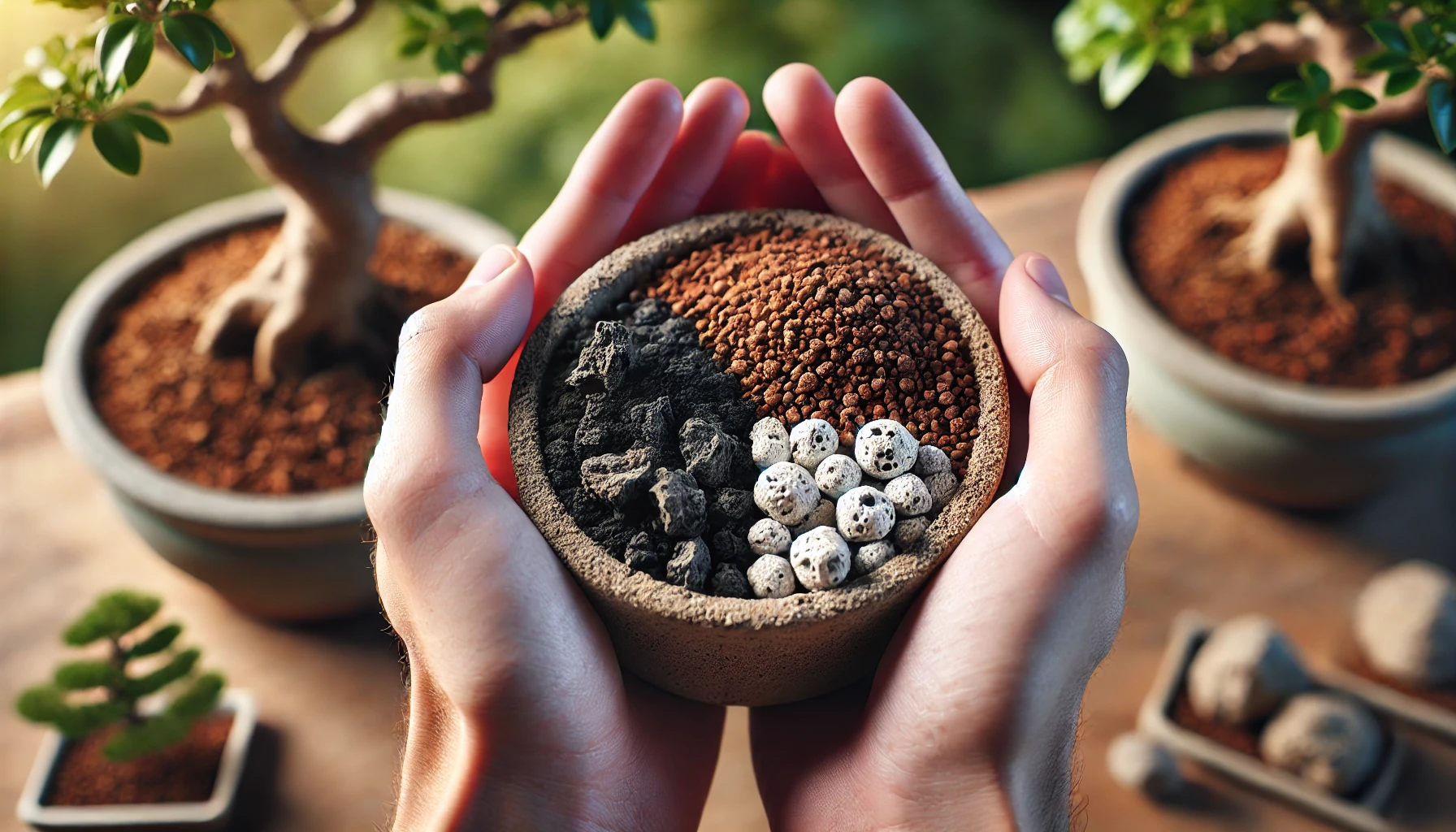
- Akadama – A granular clay produced in Japan that is used for its water and nutrient retention. Given its granularity, it is useful for aeration, but it does break down over time and many practitioners suggest replacing it every 2-3 years. Some practitioners reuse it after that time frame as a component in a different soil mix. It is slightly acidic and has a high buffer capacity, meaning its pH won’t change much over time.
- Pumice – A porous volcanic rock that is lightweight and prevents soil compaction. It aerates the roots and is slow to break down. Being porous, it will take up and retain some nutrients, but it offers no nutrient value itself.
- Lava Rock – A durable volcanic rock used for drainage and aeration. It helps to hold the mix together and prevent root rot. Lava rock has a low buffer capacity and is chemically inert, so it sort of stands alone from other components used in a soil mix. It offers no nutrients to the plant.
- Organic Component – Some bonsai practitioners will add a small part of organic compost or pine bark to their bonsai soil mix.
Most bonsai practitioners buy these components individually and create custom mixes for their trees depending on the tree species, its microclimate, and its developmental stage. You can buy some premade mixes like this one.
Standard Potting Mix
You probably have a bag of standard potting mix lying around, so you’ll be tempted to use it. If you do, be sure to understand the makeup of the soil and how it will initially impact the tree in the short-term and over time. Here are some common components in potting mix:
- Peat Moss or Coconut Coir – Both Peat Moss and Coconut Coir are lightweight organic material that is acidic and retains moisture well. Peat Moss is less environmentally-friendly (peat moss harvesting is environmentally taxing, plus coconut coir is a recycled byproduct of food production). If using a mix heavily composed of either of these two, you’ll want to pay attention to your soil’s pH and monitor the mix for soil compaction.
- Perlite – Small white volcanic rocks. These generally retain their shape well over time, so they prevent soil compaction which improves aeration and drainage. They also retain moisture well.
- Vermiculite – A mineral (magnesium-aluminum-iron silicate) that holds water and provides nutrients to the tree. Better than perlite at holding moisture.
- Sand – Helps provide drainage and structure to the mix. Sand is slow to break down and allows the tree to better anchor in the mix. When purchasing sand, make sure to select a product that has been produced for garden (rather than industrial) applications.
- Compost – Organic matter that provides nutrients and helpful microbes to the tree.
- Pine Bark – Acidic organic matter that breaks down more slowly than other organic matter on this list, it helps with aeration and drainage.
- Worm Castings – Provide nutrients to the mix. In a way, they act like a slow-release fertilizer as they break down over time.
- Limestone – Given the other materials on this list tend to skew acidic, limestone can be added to mixes to balance the pH of the substrate.
Standard Potting Mix Advantages
For me, a standard potting soil mix is advantageous because of its moisture-retaining properties. I work full-time and have a young family, so I don’t have time to water my trees multiple times per day. If you live in an area with dependable precipitation and you use potting soil mix with your trees, you may only need to water your trees every few days. Conversely, bonsai soil tends to require more frequent watering due to its superior drainage. On hot days, some practitioners need to water their trees twice daily.
Another benefit is the organic material found in standard potting mixes. Using commercial fertilizers can become expensive, so relying on the nutrients found naturally in the organic matter can reduce the need to fertilize your trees. Keep in mind that most store-bought potting mixes may include a fertilizer additive, so additional fertilizer throughout the growing season may be taxing on your trees.
Finally, a standard potting mix can be much less expensive than bonsai soil. If you are developing many pre-bonsai trees in larger containers, using bonsai soil would be cost-prohibitive for most practitioners.
Bonsai Soil Advantages
One key advantage of bonsai soil is its fantastic drainage. This greatly reduce the chances of root rot, one of the most common causes of death for containerized plants. Overly moist substrates can also create environments that can lead to harmful bacterial or fungal infections.
Bonsai soil provides great aeration to the roots. Strong air flow can lead to strong root growth. Preventing soil compaction ensures proper respiration for the tree.
The airy bonsai soil mix encourages fine, fibrous root growth. Traditional potting mixes typically promote thicker roots, which can look out of place for a miniaturized tree.
Consisting of more durable components, bonsai soil doesn’t break down as fast as potting mix. Mixes with soft organic matter will compact at a faster rate than bonsai soil, meaning you could have to repot those trees more often. Roots will also be more stable in bonsai soil as the components tend to be heavier and structurally sound.
A bonus noted by several bonsai practitioners is that rodents are less likely to dig in bonsai mixes that contain lava rock.
Conclusion
Choosing potting mix or bonsai soil for your trees depends on your lifestyle, stage of tree development, and disposable income. Most bonsai practitioners will end up acquiring most of the soil components mentioned in this article and use them to create their own soil mixes depending on their unique situations. Be aware that any substrate will need to be monitored and adjusted as it ages and the tree grows.